
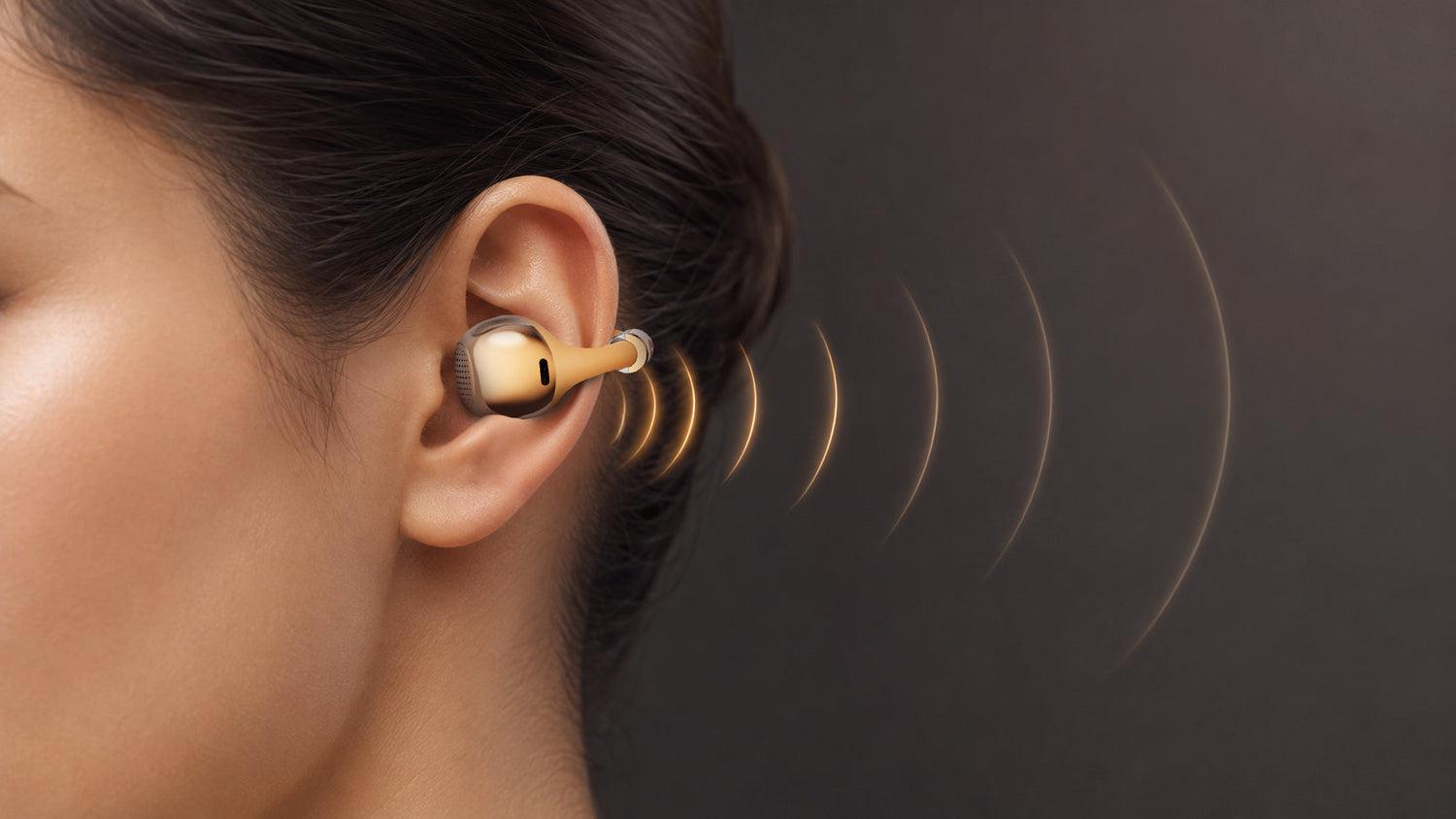
Short answer: Open-ear earbuds can let a small amount of sound escape because they do not seal the ear canal. But sound leakage is not an all-or-nothing problem. What people nearby notice depends on volume, distance, fit, the room around you, and how well the earbuds direct sound toward your ears.
That distinction matters. Wearing open-ear earbuds does not automatically mean everyone at the next table can hear your playlist. In everyday use, thoughtful acoustic design and a sensible listening level can make the experience feel much more focused—while still giving you the awareness and comfort that made you choose an open-ear design in the first place.

Open-ear listening keeps you connected to the room; good design helps keep your audio directed toward you.
Open-Ear Sound Leakage Is Not Simply Yes or No
Open-ear earbuds place the speaker close to your ear without inserting a silicone tip into the ear canal. That open fit leaves space for environmental sound to reach you, which is useful when you are working, walking, commuting, or moving through the day.
Because there is no physical seal, a little sound can also travel outward. How noticeable it becomes usually comes down to four practical details:
- Volume: Higher volume sends more sound beyond the listening area.
- Fit: A speaker that is positioned well can sound clearer without being pushed louder.
- Distance: Someone beside you is more likely to notice faint audio than someone several feet away.
- Environment: A silent reading room reveals more than a café, office, or city sidewalk.
This is why two people can have very different opinions about open-ear sound leakage. One may be listening at a comfortable level during a morning walk. The other may be trying to overpower a noisy train at near-maximum volume. The earbud category is the same; the real listening conditions are not.
How BUTTONS Clip Keeps Listening More Focused
BUTTONS Clip was designed around the balance that open-ear listeners actually want: hear your music and calls clearly, stay aware of real life, and avoid sending more sound into the room than necessary.
Directional Audio Aims Sound Toward the Ear
Instead of treating the speaker like a tiny room-filling loudspeaker, BUTTONS Clip uses directional audio to focus sound toward the ear. Its acoustic design is intended to reduce outward spread and create a more controlled personal listening area.
“Reduce” is the honest word here. No open-ear earbud can promise complete acoustic isolation, because complete isolation would work against the purpose of keeping the ear open. The advantage of directional audio is that it manages that tradeoff rather than ignoring it.
A Stable C-Bridge Helps Maintain the Right Position
Speaker direction only works well when the earbud sits where it should. The flexible Nitinol C-Bridge in BUTTONS Clip is designed to hold the front sound unit in a consistent position near the ear while keeping the ear canal open.
That stable clip-on fit matters for more than comfort. When audio is aimed correctly, you are less likely to chase clarity by immediately turning up the volume. A small adjustment in position can often make a bigger difference than another tap on the volume button.
Clear Open-Ear Sound at a Comfortable Level
BUTTONS Clip uses a 12 mm titanium driver designed for clean, natural open-ear sound across music, podcasts, and calls.
The goal is not simply to play louder. It is to keep voices and everyday details clear at a level that feels comfortable for longer listening.

Directional audio, stable placement, and sensible volume work together to create more focused open-ear listening.
What This Means in Everyday Use
Most people do not listen in a soundproof test room. They move between a home office, a coffee shop, a commute, a quick call, and an evening walk. BUTTONS Clip is designed for that changing rhythm rather than one perfectly controlled environment.
Home or Shared Office
An open-ear fit lets you hear a coworker, conversation, or doorbell without constantly removing an earbud.
Position BUTTONS Clip comfortably first, then choose a moderate listening level that suits the room.
Café or Commute
You can stay connected to station announcements and the activity around you while listening to music, podcasts, or calls.
Background sound may make faint leakage less noticeable, but avoid raising the volume simply to compete with every sound in the environment.
Walking and Outdoor Movement
The open fit helps preserve awareness of traffic, people, bicycles, and changing surroundings.
Use only the volume you need and keep important environmental cues audible. You can learn more in our guide to open-ear earbuds for running, cycling, and commuting.
Very Quiet Rooms
In a silent reading room or shared bedroom, even faint sounds become easier to notice.
BUTTONS Clip can still provide comfortable, pressure-free listening in these spaces. Simply lower the volume slightly and check what someone sitting nearby can hear.

Room noise changes how noticeable faint audio feels, even when your listening setup stays the same.
For phone calls, the same open fit can make conversations feel more natural because you can hear your own voice and remain aware of the room.
BUTTONS Clip also combines dual beamforming microphones with a VPU voice sensor to support clearer voice pickup. If calls are a major part of your day, our guide to open-ear earbuds for calls explains what to consider.
Four Ways to Get the Best Balance From BUTTONS Clip
1. Position Before Increasing Volume
Make sure the sound unit is aligned comfortably near the ear. A slight adjustment may improve clarity immediately.
2. Set the Volume for the Room You Are In
The level that felt right outdoors may be unnecessarily high after you sit down in a quiet office.
3. Give Your Ears a Moment to Adjust
Start lower, listen for a minute, and raise the volume only if you actually need to.
4. Try a Quick Two-Person Check
In the quiet space where you normally work or relax, ask someone nearby whether they can identify the audio. It takes less than a minute and gives you a useful personal baseline.
These habits are not about making open-ear listening complicated. They simply help the hardware work as intended: sound directed toward you, awareness left open around you.
Where Open-Ear Earbuds Have Honest Limits
BUTTONS Clip is designed to reduce sound leakage, not claim that it can eliminate it. At very high volume in a silent room, someone sitting close may notice faint audio. That is true of the open-ear category because there is no sealed ear tip containing the sound.
If your only priority is blocking outside noise or creating the strongest possible acoustic isolation, a sealed in-ear design may be a better match. Our open-ear vs. in-ear comparison covers that choice more fully.
But most days are not spent inside an airplane cabin or a silent studio. They are spent moving between people, tasks, calls, streets, and conversations.
In those moments, the open-ear balance can be more useful: comfortable sound, a secure clip-on fit, and less disconnection from what is happening around you. That is the everyday space BUTTONS Clip was built for.
Frequently Asked Questions
Do All Open-Ear Earbuds Leak Sound?
Open-ear earbuds can allow some sound to escape because they do not seal the ear canal. The amount people notice varies significantly with acoustic design, volume, fit, distance, and background noise.
Does BUTTONS Clip Completely Eliminate Sound Leakage?
No open-ear product should promise complete isolation. BUTTONS Clip uses directional audio to focus sound toward the ear and reduce outward spread while preserving the awareness and pressure-free comfort of an open fit.
Is BUTTONS Clip Suitable for an Office?
BUTTONS Clip is designed for work, calls, and daily listening. Its open-ear fit lets you remain aware of coworkers and conversations, while directional audio helps keep listening more focused.
In an especially quiet room, use a moderate volume and position the earbuds carefully.
What Is Directional Audio in Open-Ear Earbuds?
Directional audio is an acoustic approach that aims more of the speaker’s sound toward the listener’s ear instead of allowing it to spread equally in every direction.
It helps balance personal listening with environmental awareness.
Is BUTTONS Clip a Bone-Conduction Headphone?
No. BUTTONS Clip plays music through air-conduction open-ear speakers. Its VPU bone-conduction sensor is used for voice pickup during calls, not for music playback.
Read our open-ear vs. bone-conduction guide for the full distinction.
A More Thoughtful Kind of Open-Ear Listening
So, do open-ear earbuds leak sound? They can—but that short answer leaves out the part that matters most. Leakage is shaped by the earbud’s acoustic design, how it fits, how loudly you listen, and where you use it.
BUTTONS Clip brings directional audio, a stable Nitinol C-Bridge, a 12 mm titanium driver, and a lightweight open-ear fit together in one design.
The result is not about shutting out the world. It is about keeping your audio more focused while leaving real life within reach.
Explore BUTTONS Clip and discover open-ear listening designed for clear sound, everyday awareness, and comfortable movement.


Leave a comment
All comments are moderated before being published.
This site is protected by hCaptcha and the hCaptcha Privacy Policy and Terms of Service apply.